
Call Us 405.691.4444
Planning a Home Addition: Timeline, Costs, and Key Considerations
April 18, 2026When you plan a home addition, you’re not just adding square footage you’re modifying the building’s structural, mechanical, and financial “system,” so careful control of timeline, cost, and structural scope is critical from day one.
You serve your household best when you treat the project like a tightly written spec: defined inputs, predictable outputs.
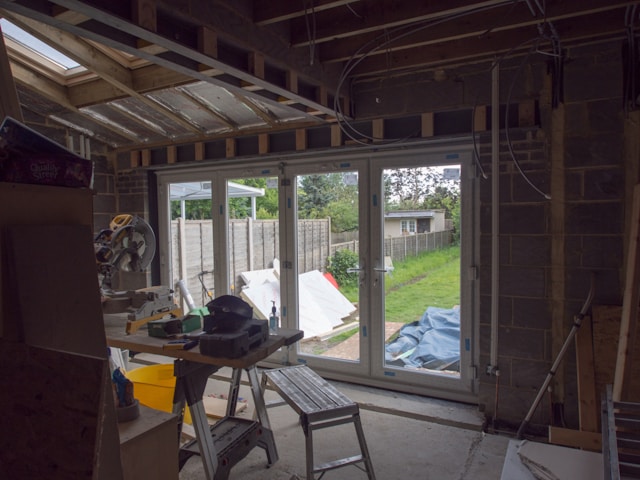
You’ll need a realistic home addition planning timeline that sequences decisions, procurement, inspections, and trades so no phase idles others or inflates cost.
In parallel, you must address home addition structural considerations: load paths, foundation capacity, lateral bracing, and integration with existing framing, roofing, and building envelope.
When you coordinate scope, budget, and sequencing with code requirements, you protect safety, stewardship, and long‑term performance.
Understanding project timelines
You’ve seen how scope, structure, and budget work like a tightly written spec; the project timeline is the execution schedule that keeps that spec on track. You move from concept sketches to permit-ready drawings, then through inspection-driven milestones until final walkthrough.
First, you lock in requirements and floor plans, then generate a room addition cost estimate aligned with structural loads, mechanical tie-ins, and finish level.
Next, your builder sequences engineering stamps and home addition permits and zoning approvals, treating each jurisdictional review like a gate in a deployment pipeline.
Once approved, construction runs in clearly defined phases: foundation, framing, rough-in systems, insulation, drywall, and finishes, each with its own inspections.
A disciplined timeline protects neighbors, your household, and long-term performance.
Breaking down home addition costs including materials
Although every home addition is unique, its cost model breaks cleanly into three primary buckets: materials, labor, and contingencies for unknowns.
You’ll evaluate the cost of home addition per square foot by itemizing structural components, envelope systems, finishes, and fixtures, then mapping each to code-compliant specifications and manufacturer data.
For a kitchen expansion cost, you’ll also allocate for cabinets, countertops, appliance circuits, ventilation, and task lighting.
Labor costs reflect licensed trades—carpenters, electricians, plumbers, HVAC, and inspectors—billed against a clearly defined scope, schedule, and drawing set.
To serve your household well, you must protect the budget with a contingency line, typically 10–20%, for concealed conditions, minor redesigns, and code-driven upgrades discovered once walls open or foundations are exposed.
Key structural, design, and system integration
A successful home addition starts with structural integrity, then aligns design and building systems around that framework. You begin by verifying load paths, foundation capacity, and lateral bracing so the design build home addition operates as one unified structure, not an attached afterthought.
For a second story addition cost, you also model roof removal, new floor framing, and stair loads, then confirm local code compliance.
You integrate HVAC, electrical, and plumbing like a clean codebase: mapped, labeled, and future‑proofed.
Duct sizing, panel capacity, and pipe routing must support comfort and service access, not just pass inspection.
Finally, you specify durable, low‑maintenance assemblies that protect your family’s time and resources.
- Protect what your family already built
- Create space to host and care for others
- Reduce future disruptions and repairs
- Align today’s investment with tomorrow’s service
Conclusion
When the scope, sequencing, and risks of a home addition start to look more like a complex deployment than a simple “remodel,” an experienced builder like Dub Stone Construction becomes your primary reliability layer. You’re not just adding square footage; you’re orchestrating load paths, MEP tie-ins, and inspections on a live system—your home.
Partnering with a home renovation contractor Oklahoma City trusts means you get disciplined project staging, clean documentation, and strict code alignment from concept through punch list.
Whether you’re evaluating full additions or garage conversion ideas, Dub Stone Construction validates structural assumptions, right-sizes HVAC and electrical, and sequences trades to minimize downtime for your family.
You serve others best when your own home runs reliably; they help you build that foundation.
ADDRESS:
15800 South Western Ave. Oklahoma City, OK 73170
PHONE:
405.691.4444





What's New
-

New Website
We here at Dubstone Construction are pleased to announce the launch of our ne...